

FEATURED ARTIST:
ALICE LIPTROT
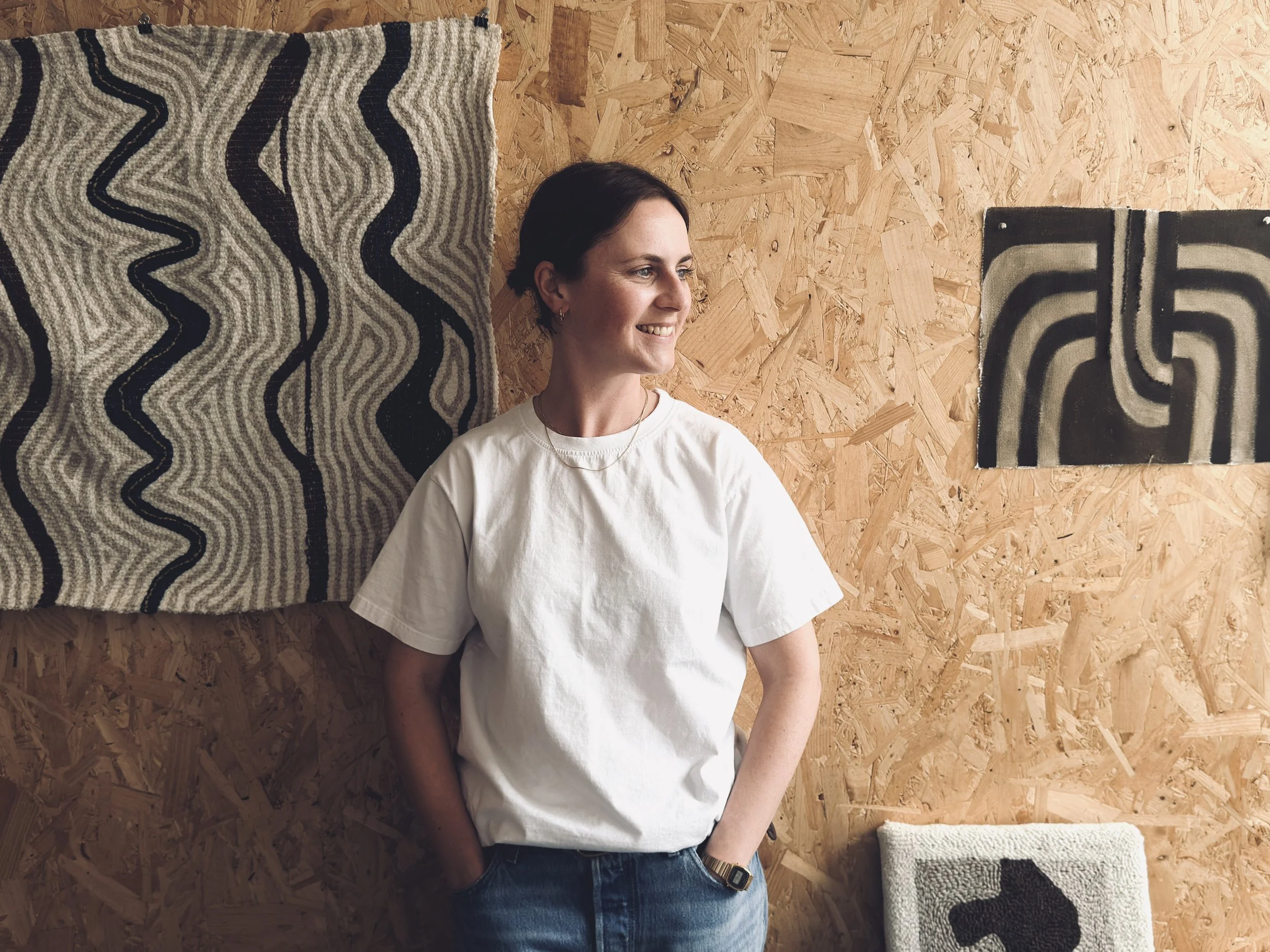
In conversation with textile
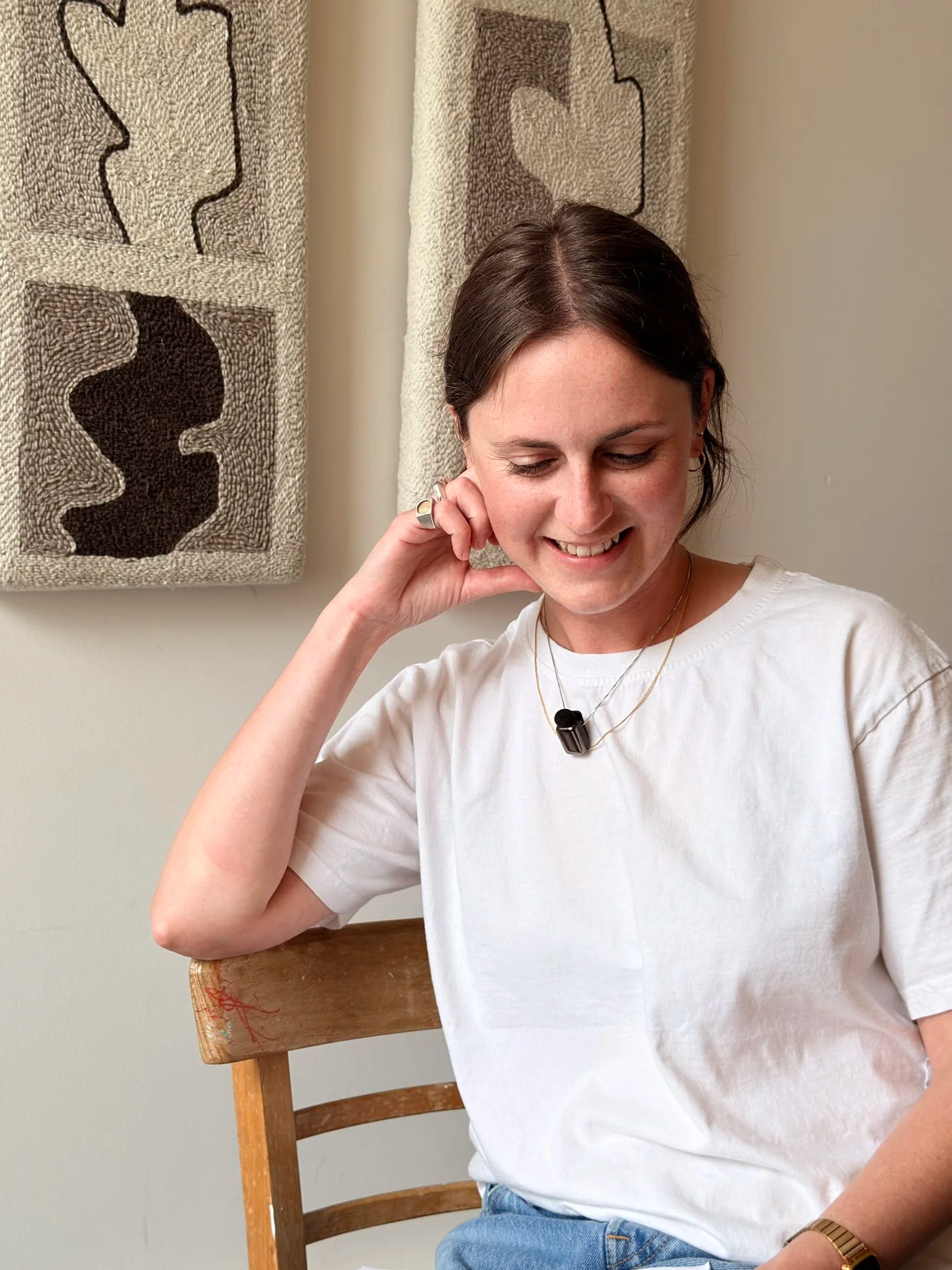
artist Alice Liptrot in FolkestoneAlice Liptrot welcomed us into her studio, a space shaped by light, texture, and a quiet sense of focus. I first came across her work a few years ago and have been drawn to it ever since, making this visit a long-awaited moment of exchange.
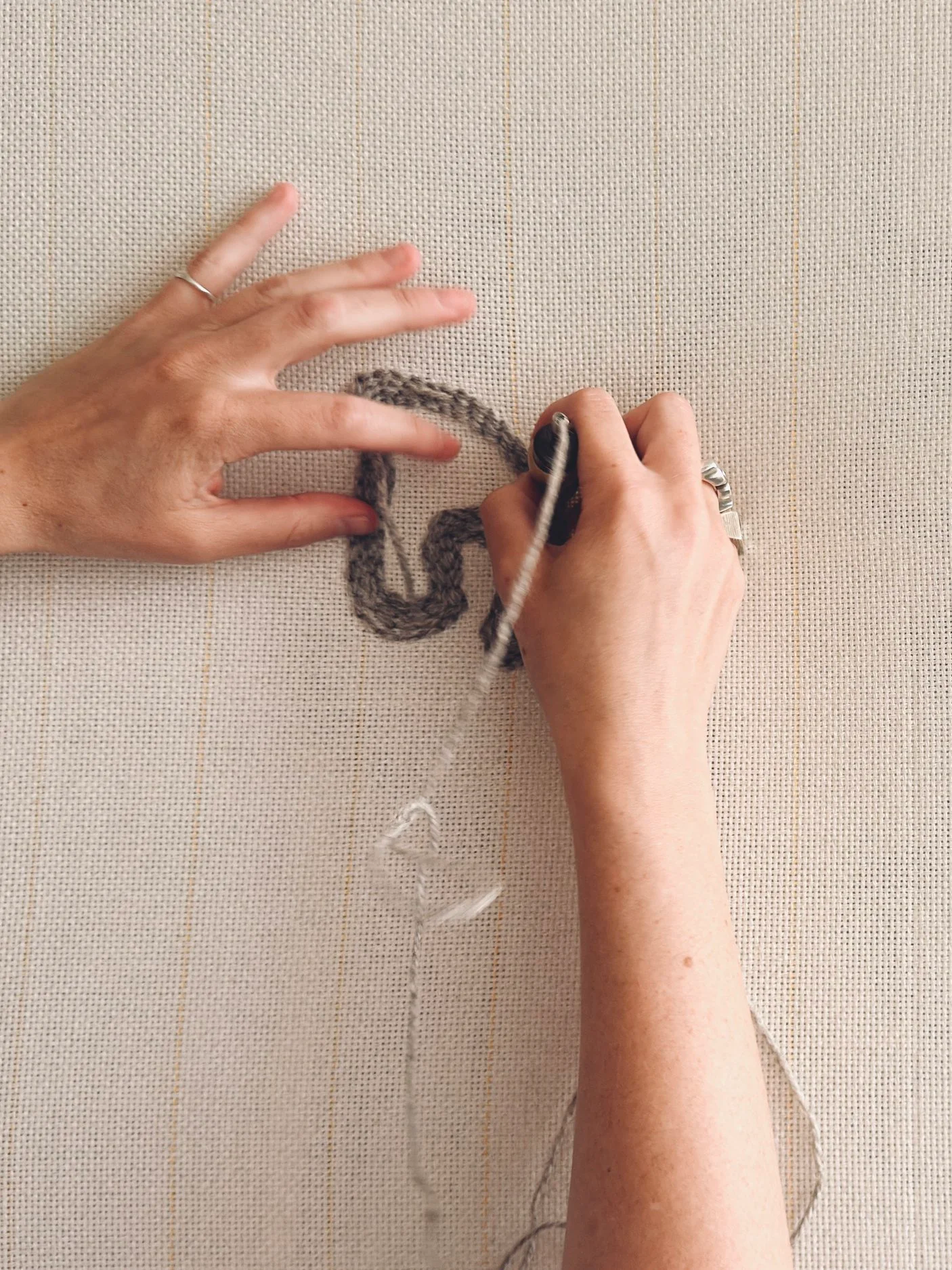
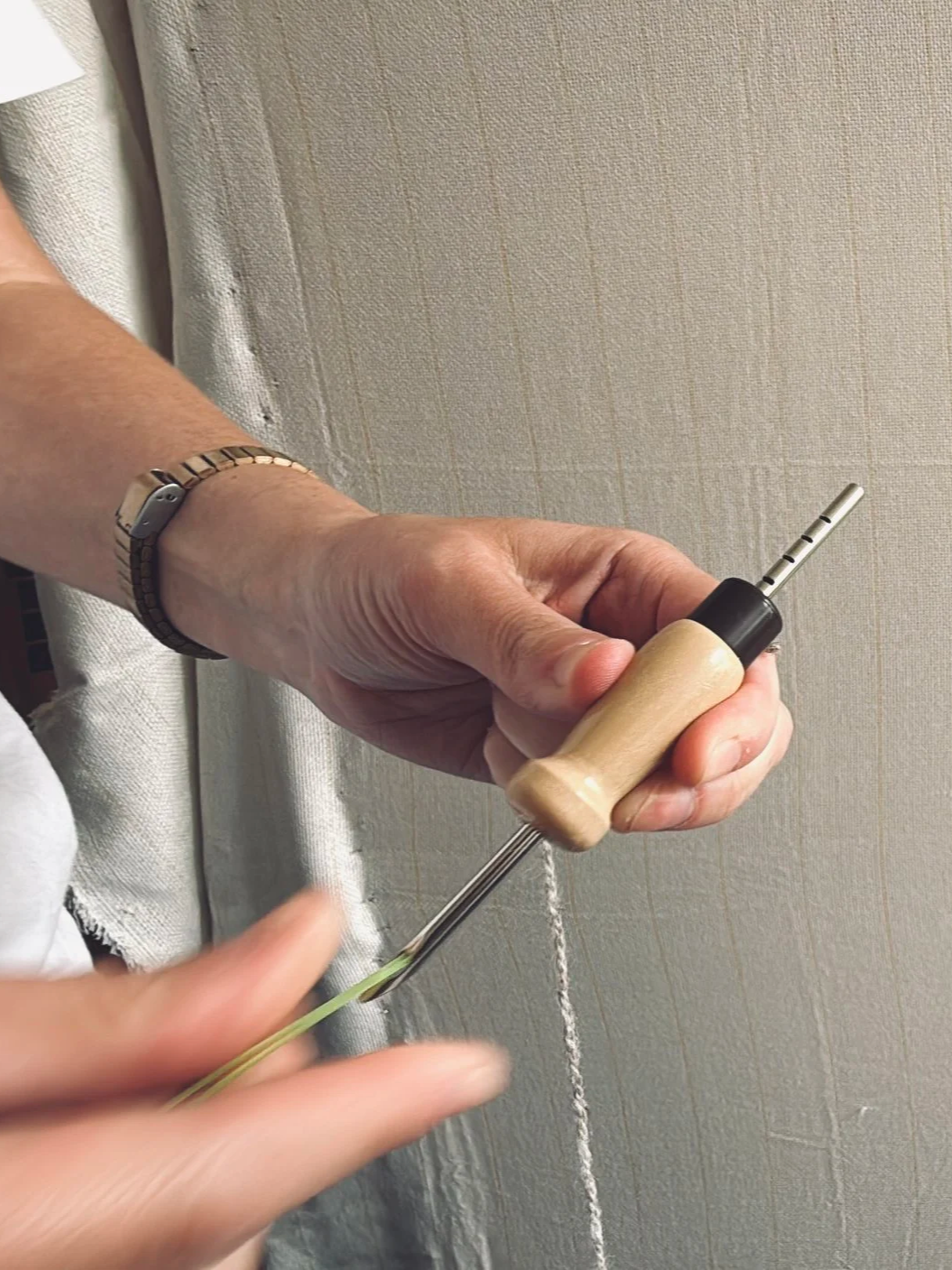
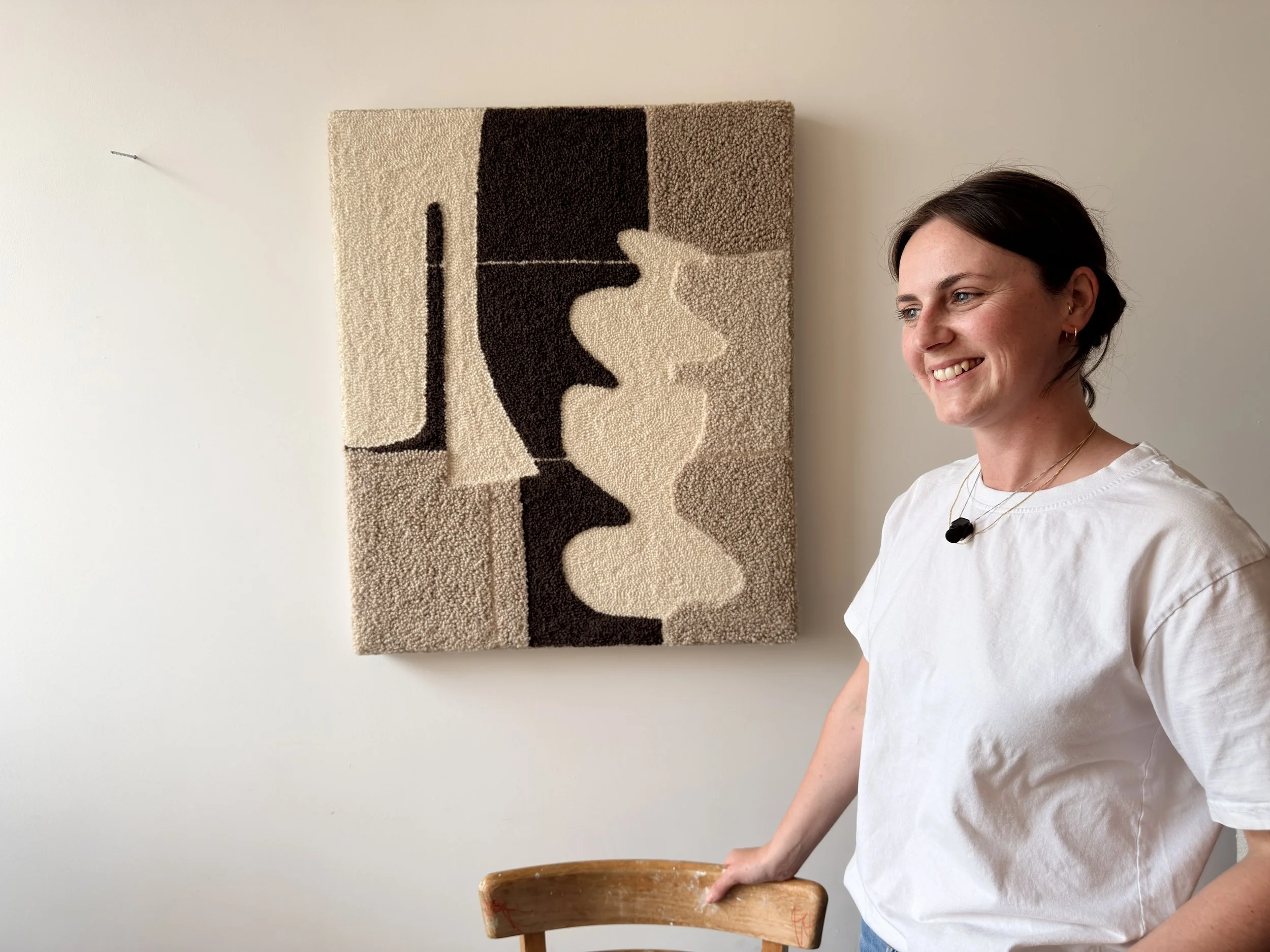
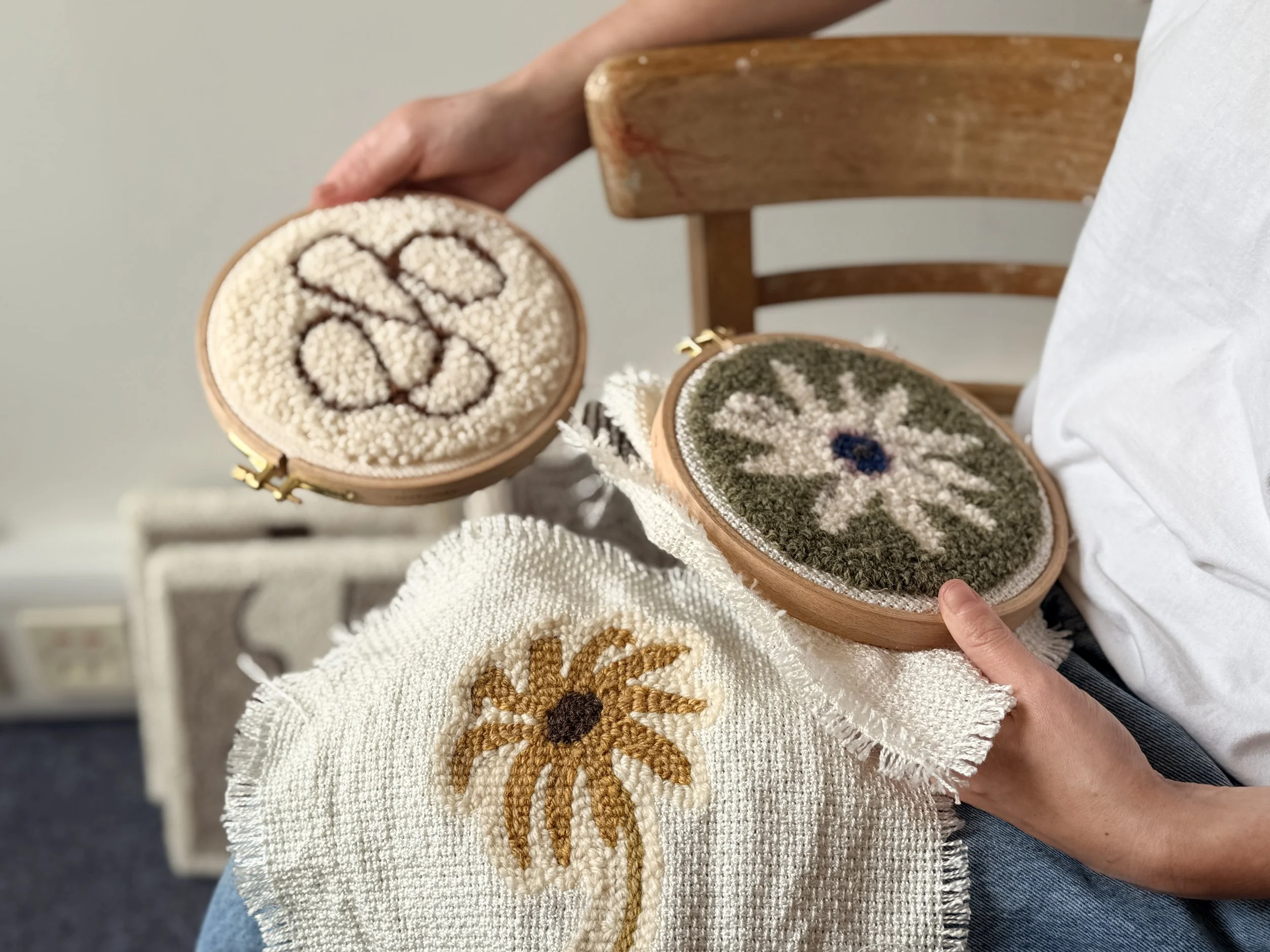
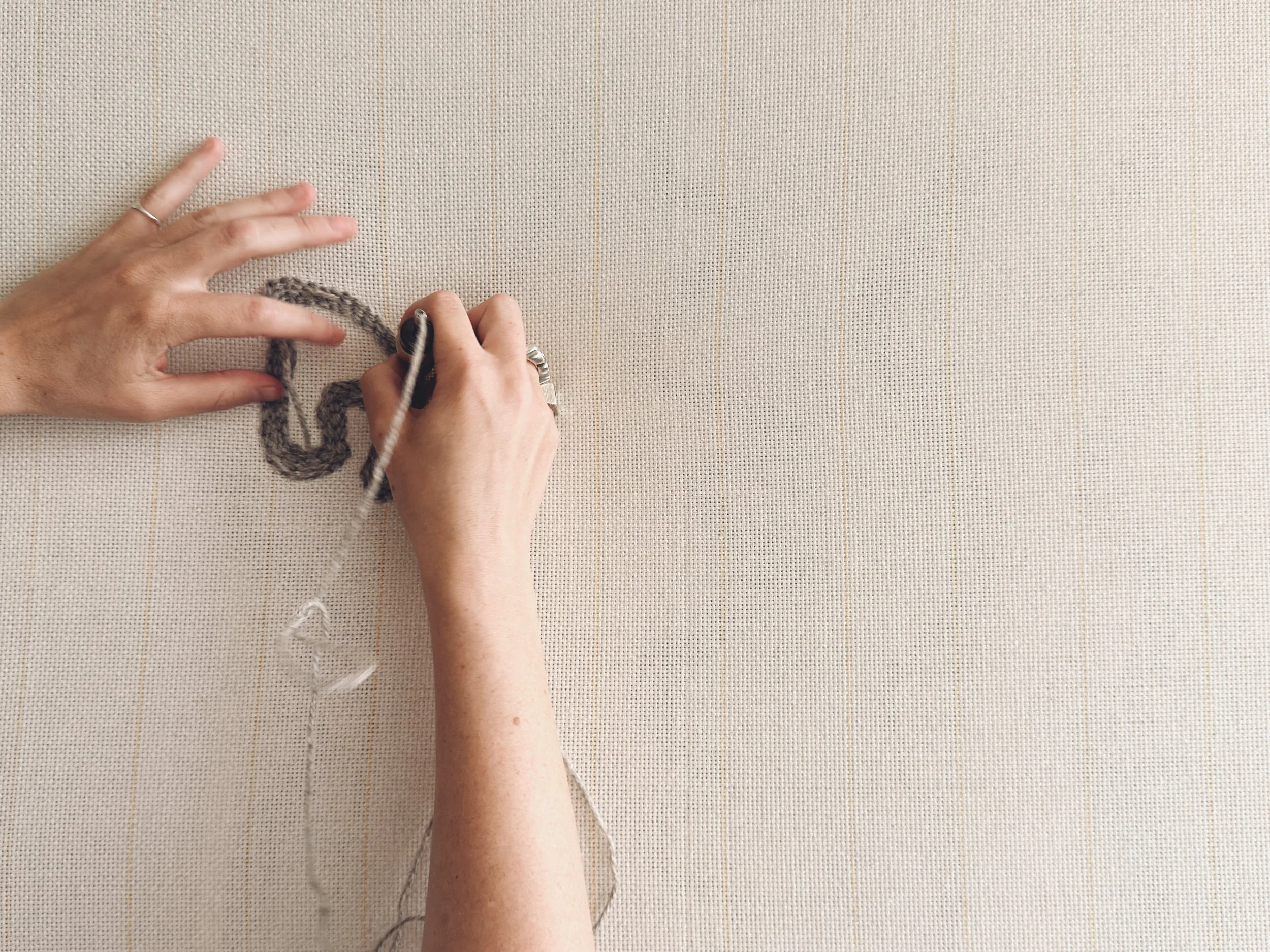
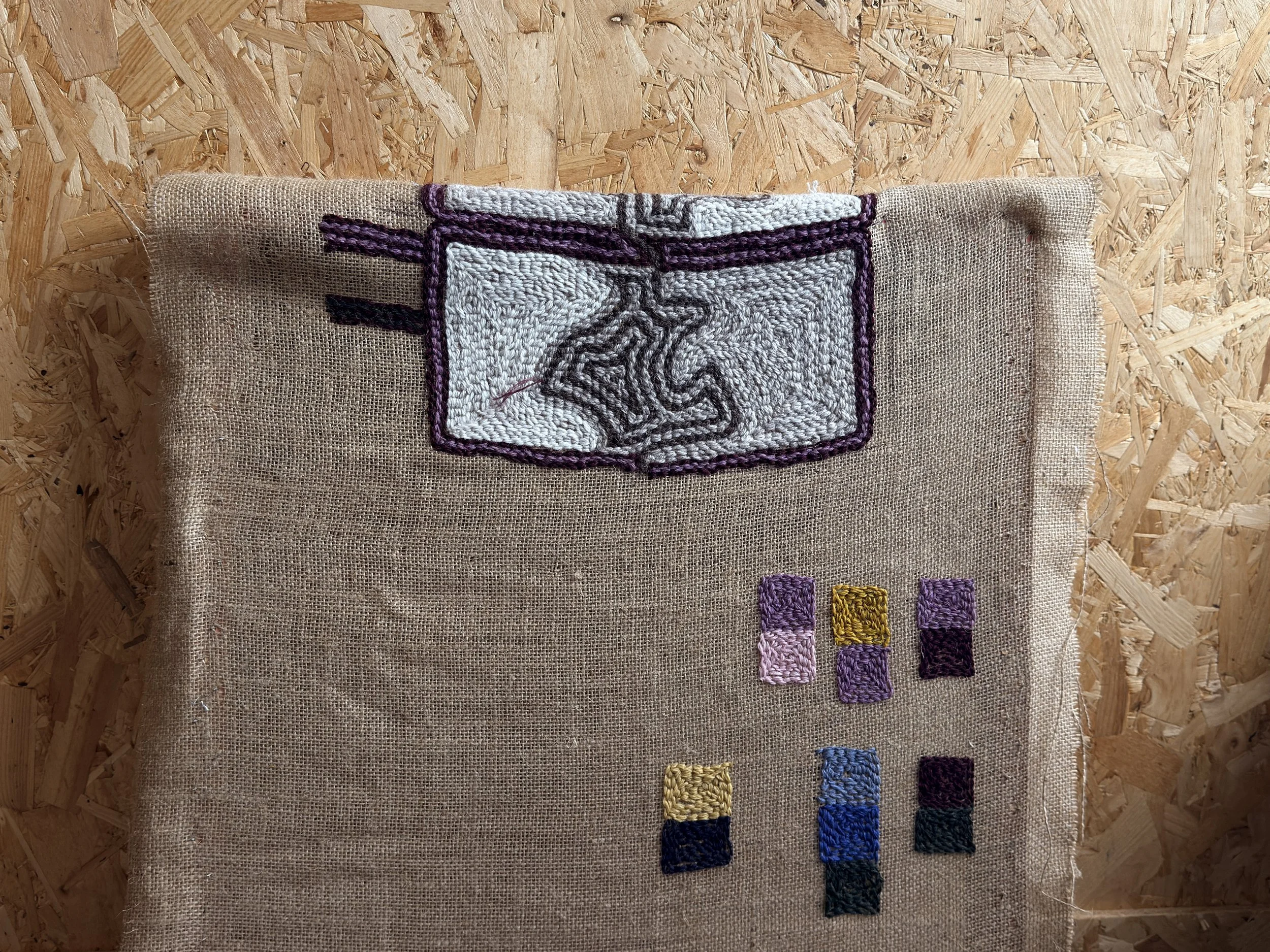
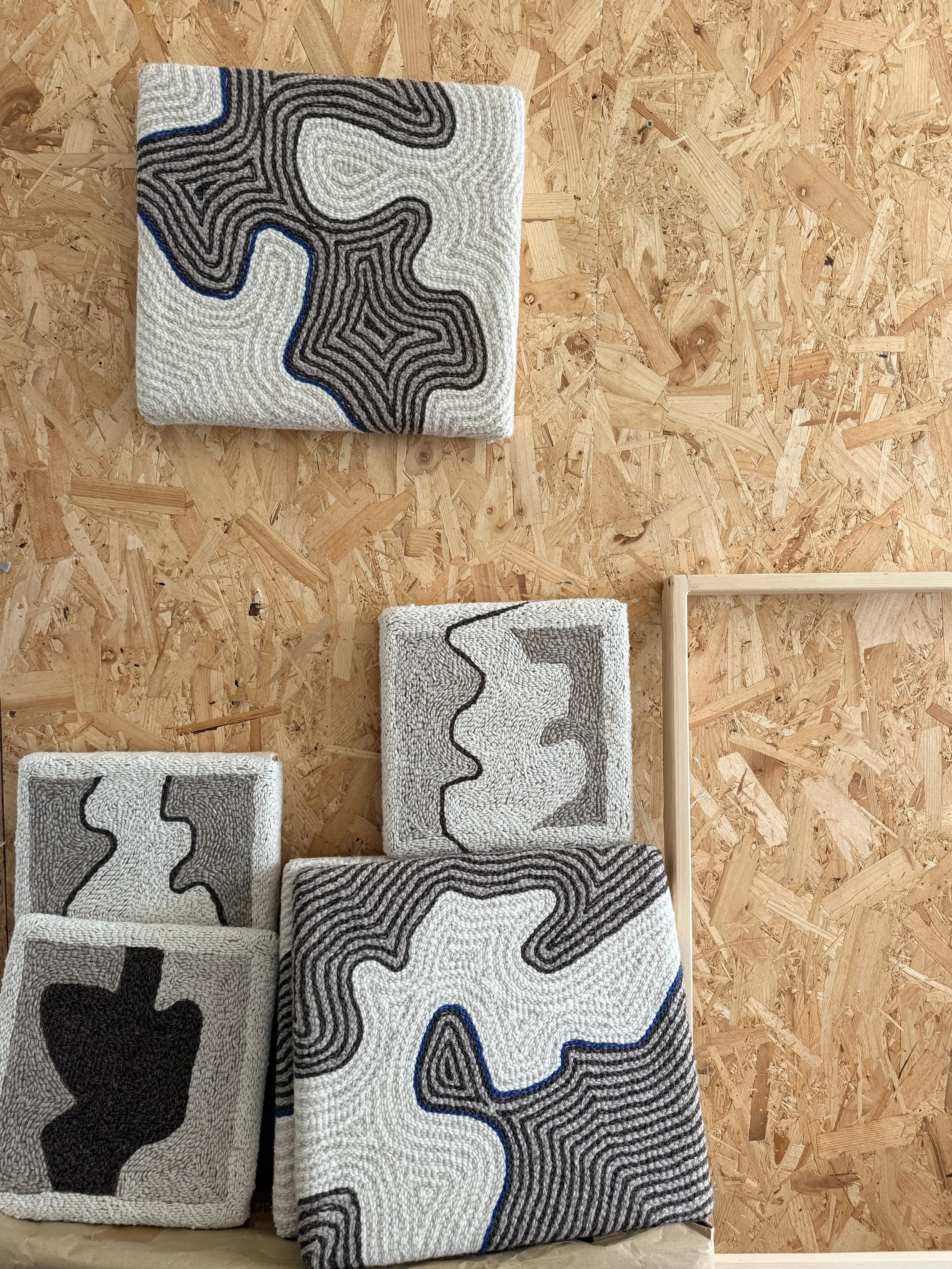
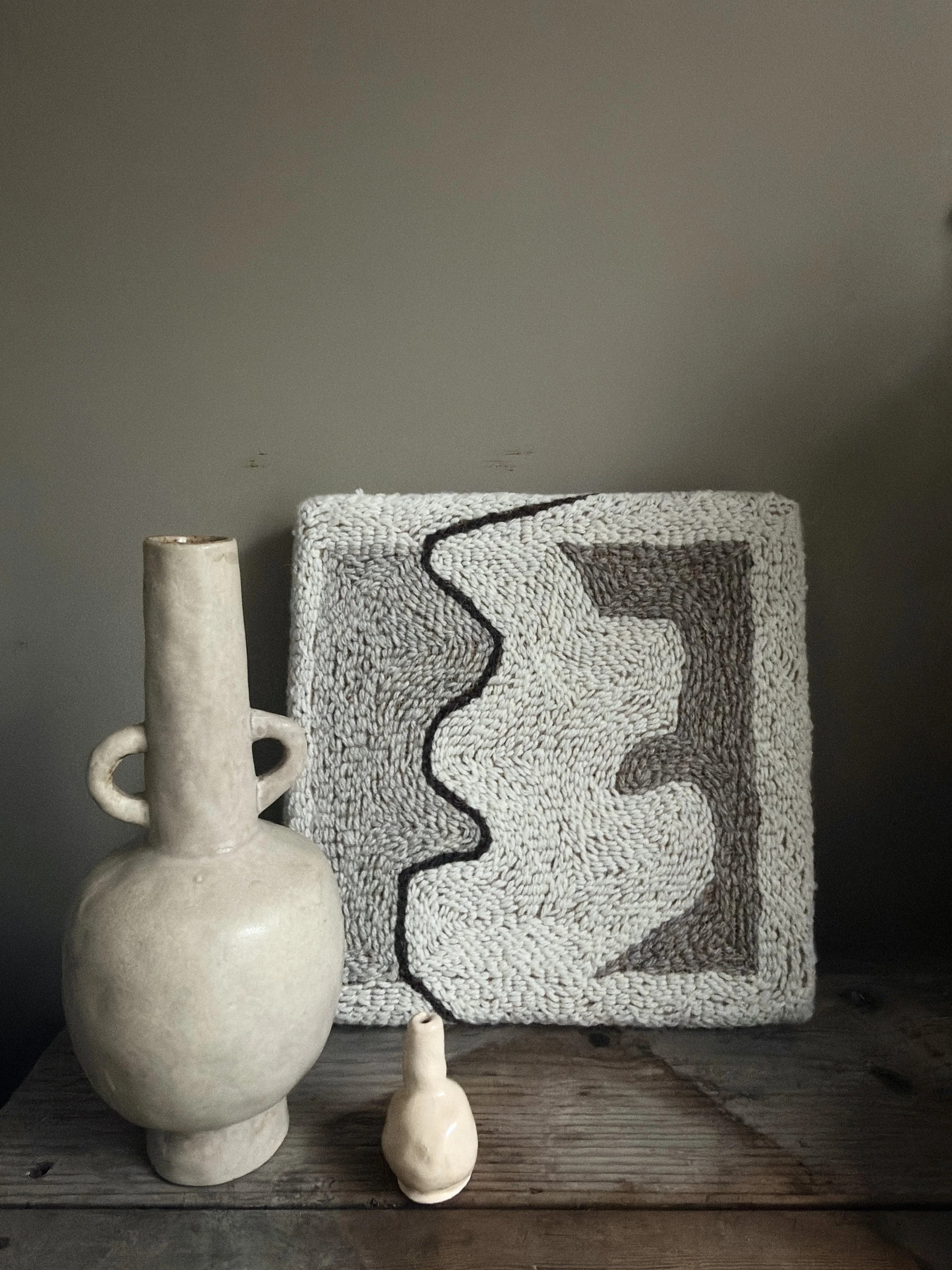
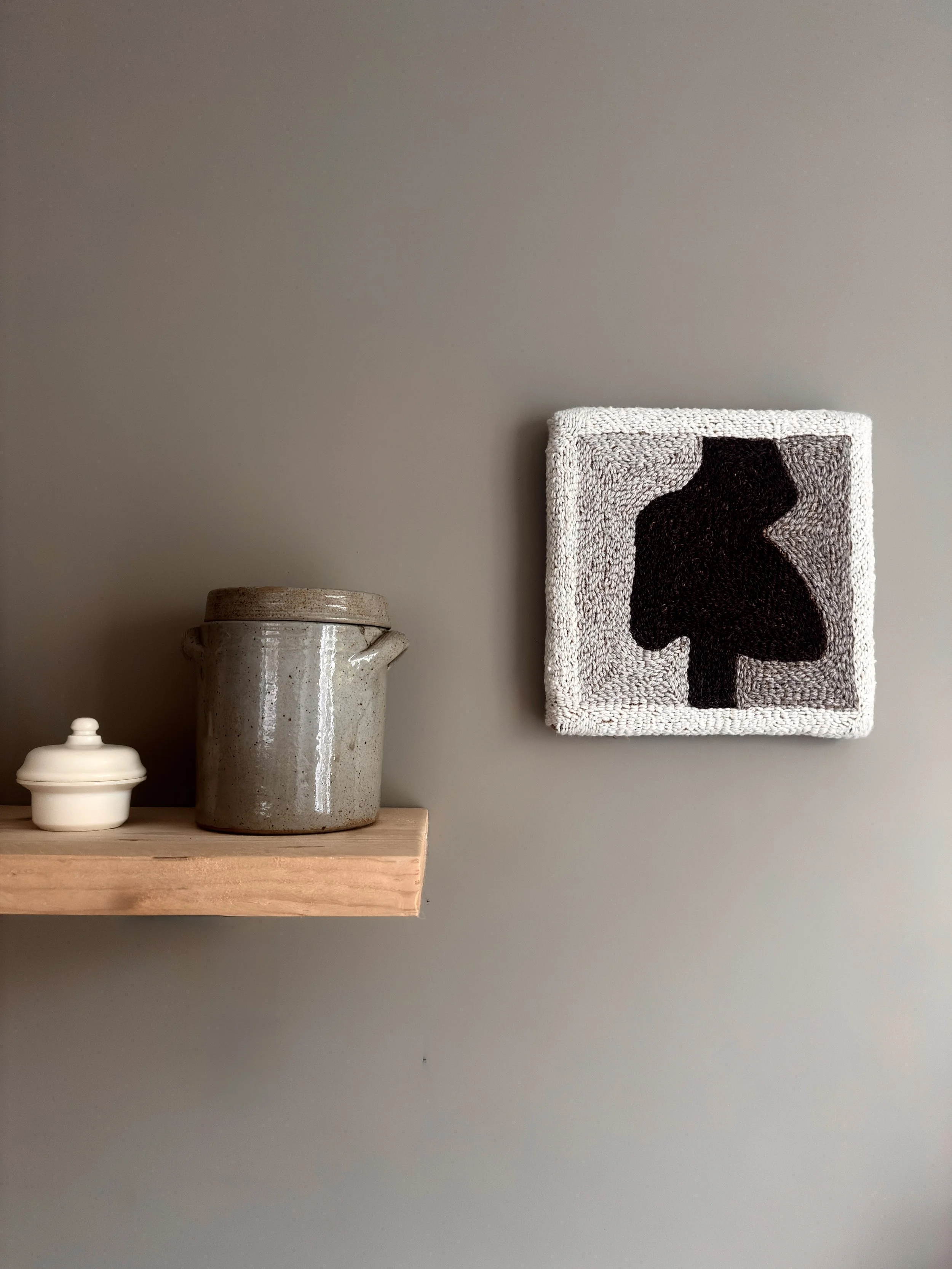
Working with punch needle as a form of drawing, Alice translates ideas into layered, tactile compositions. Her work sits between abstraction and material sensitivity, where yarn becomes both line and surface.
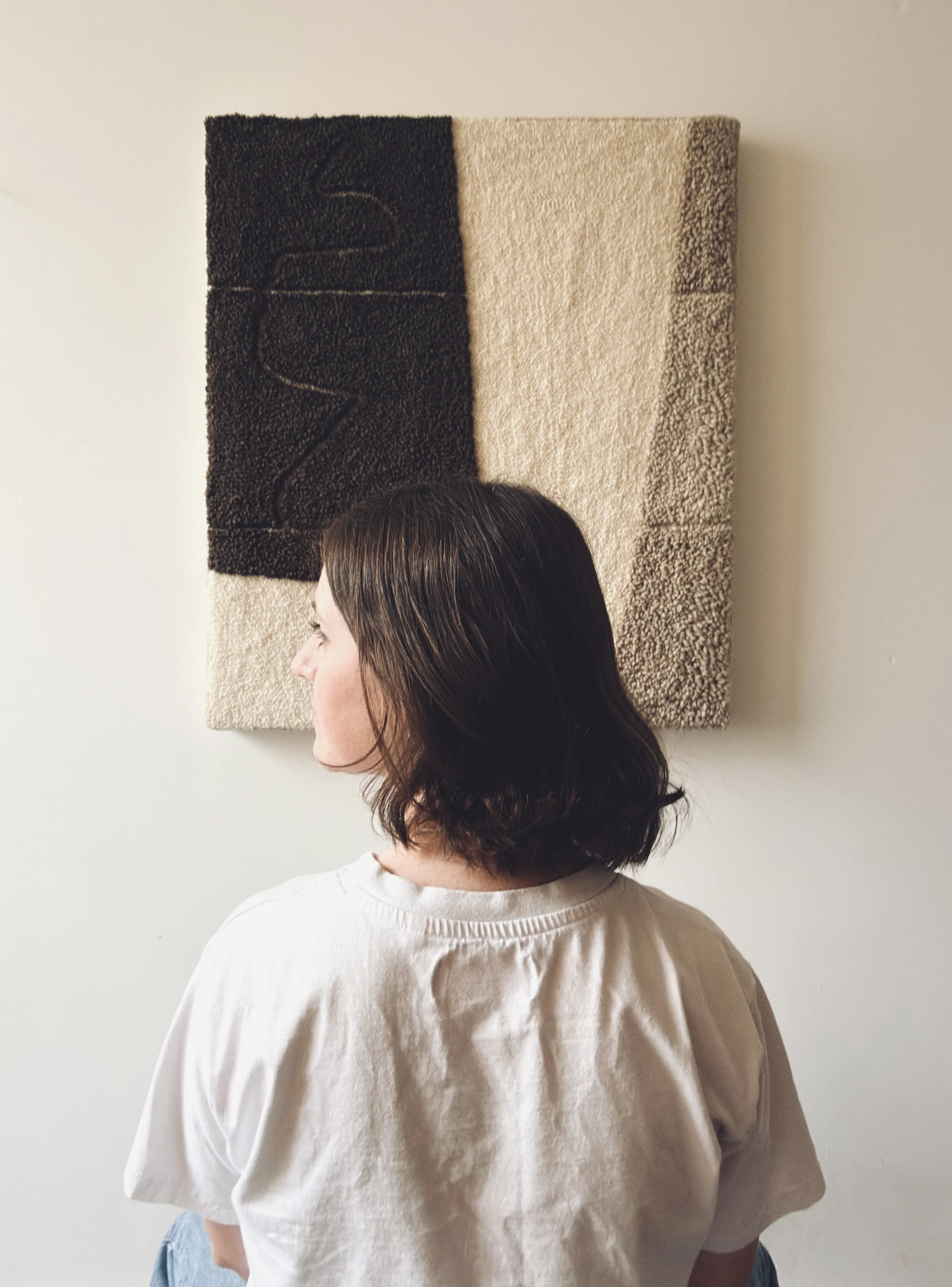
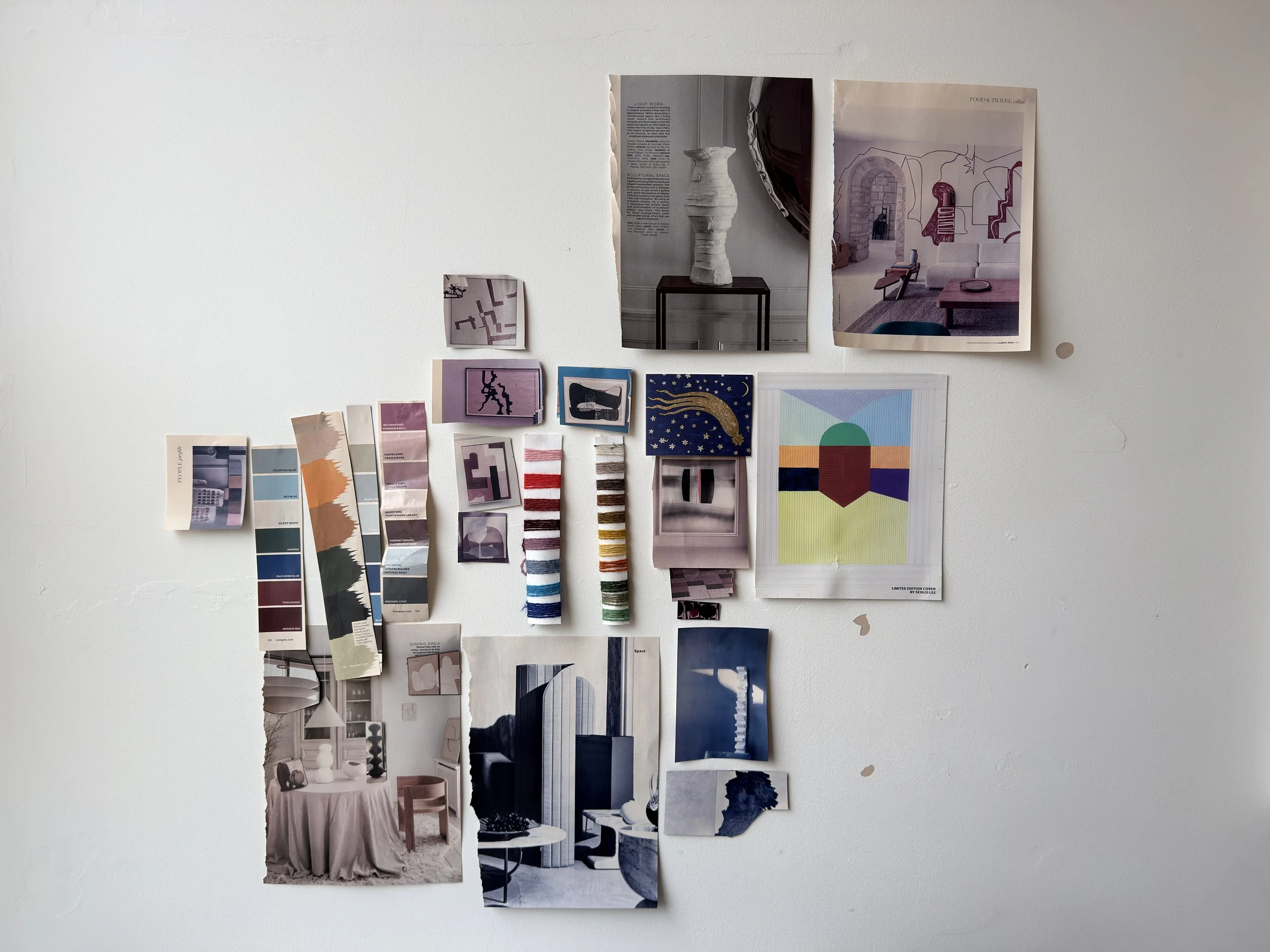
Alice’s work begins with a concept rather than an image, gradually unfolding through making. “It starts in my head first, and then I build it from there,” she explains. “It becomes physical through the material.”
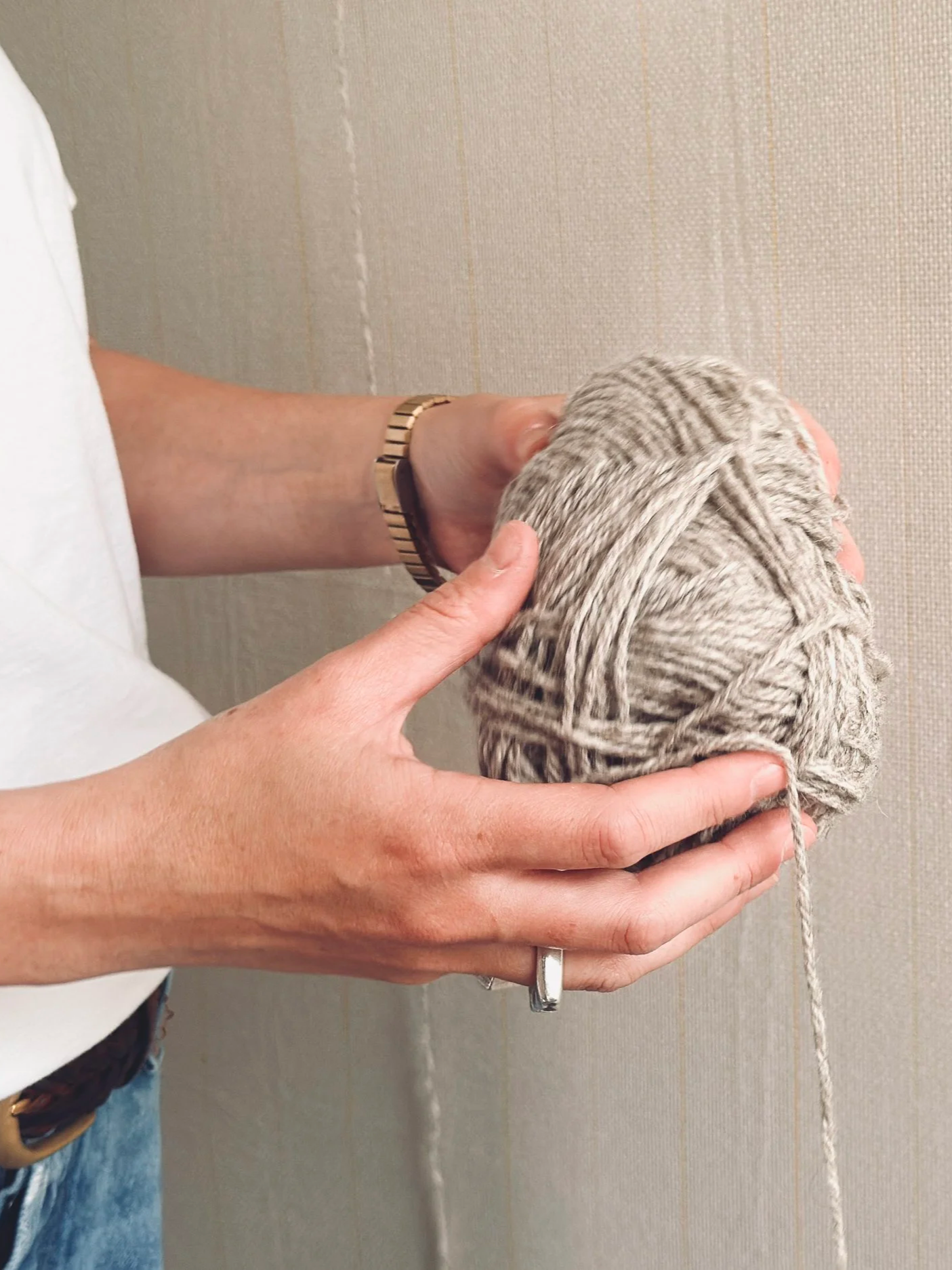
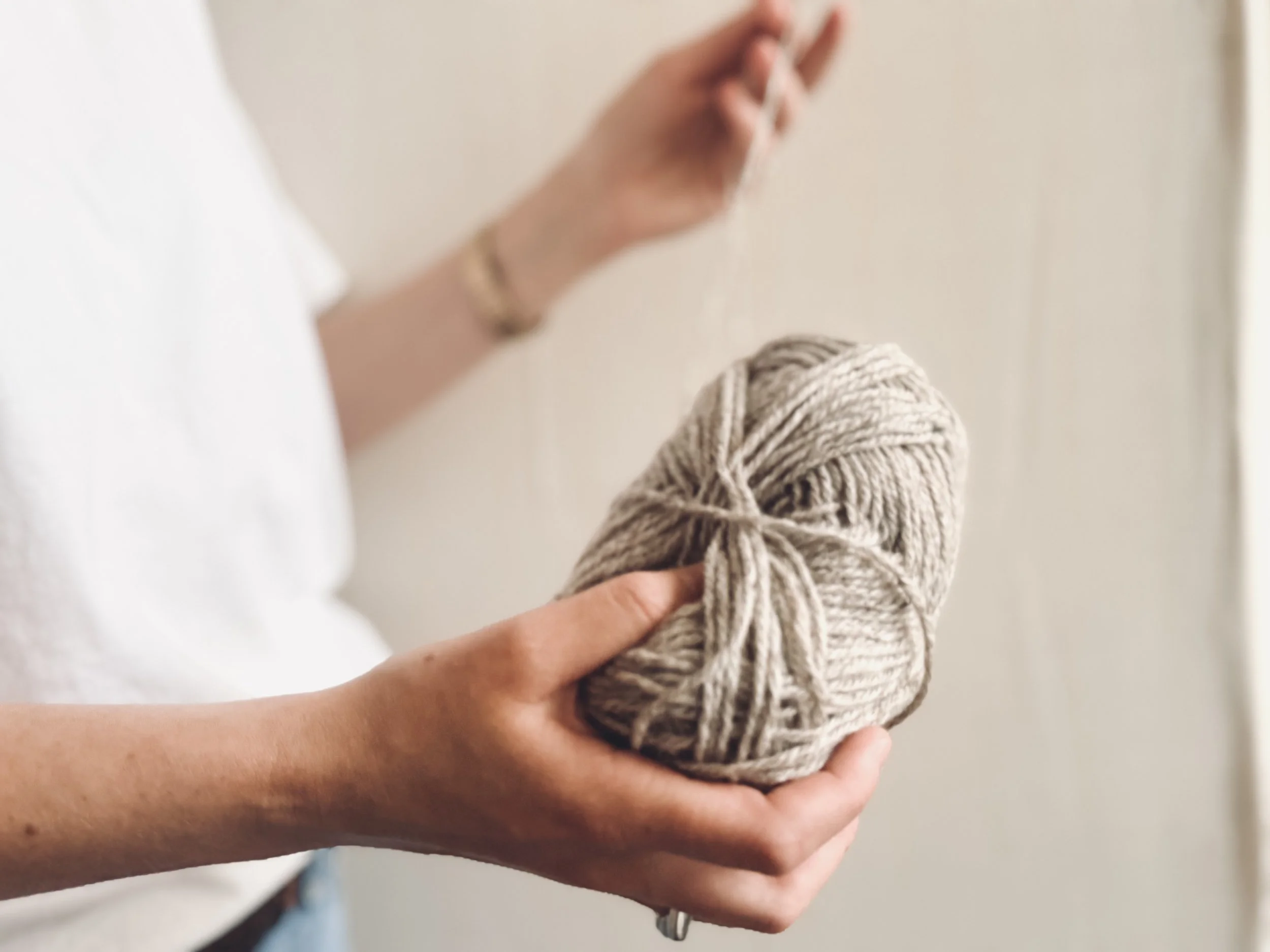
Liptrot’s process is grounded in a deep engagement with material and constraint. She works exclusively with British wool, favouring undyed fibres sourced from Romney Marsh. Natural tones — browns, neutrals, soft whites — form a limited palette that she uses as a framework for exploring depth, shadow, and contrast.
“I like having that restriction. It gives me something to work within, and then I can push it through tone and texture.”
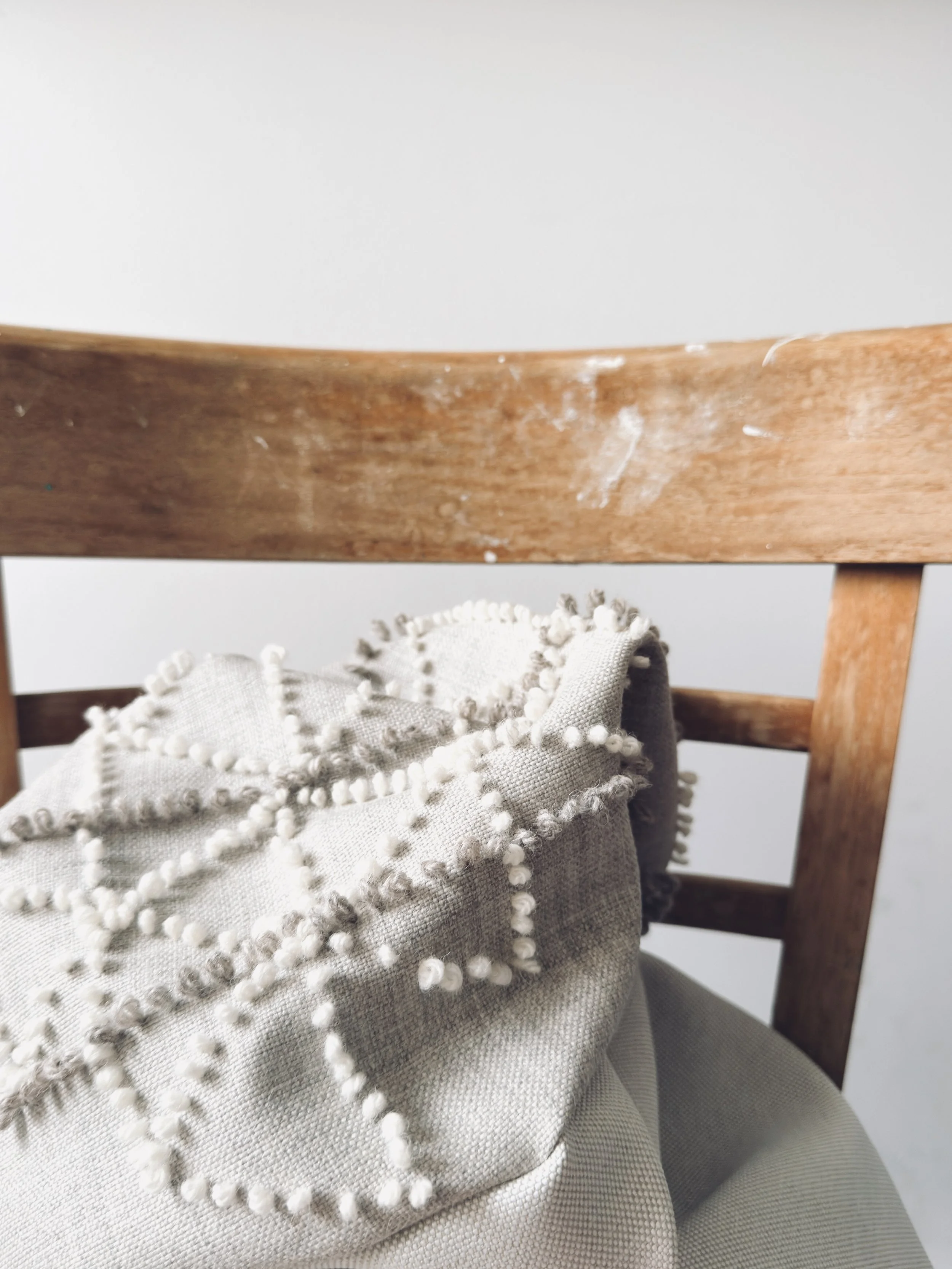
Texture itself is central to her practice. Through variations in pile height and surface density, she creates works that oscillate between drawing and relief, flatness and sculptural presence.
Q: How did you move from knitwear design into punch needle work?
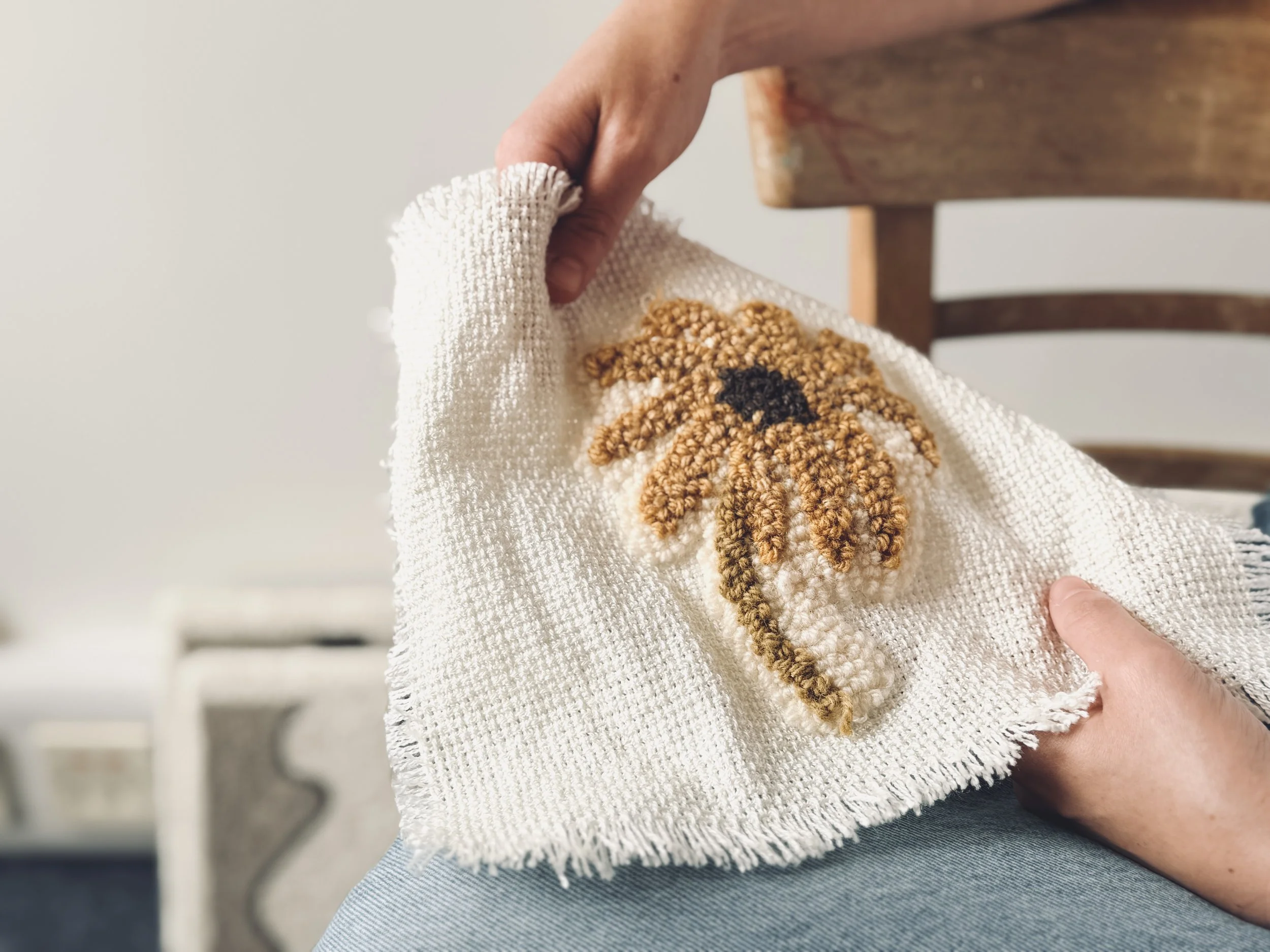
A: During lockdown, I started seeing punch needle everywhere. Like many people, I was trying different creative things at home, and it immediately stood out to me.
It felt very intuitive — like drawing, but with yarn. Compared to knitwear, which is quite structured and mathematical, punch needle felt much more open and free.
I also loved that the work could exist as a wall-based object, almost like a painting, but with texture and depth. It felt like a way to bring textiles into a more sculptural and visual space.
Q: Could you tell us about your background and how you first became interested in textiles?
A: I first became drawn to textiles at sixth form, when I studied fashion and textiles. I really enjoyed it, especially the process of creating mood boards. That was probably the first time I realised how much I enjoyed building visual ideas.
What I loved most was the range of materials you could work with — the idea that you could create almost anything from fabric.
I then went on to do an art foundation course, and later specialised in textiles at university, focusing on knitwear. We explored woven textiles, printed textiles, and knit.
I enjoyed all three, but print felt too fast for me — you’d create all this work and then quickly screen print it and move on. Weave was almost too slow, although beautiful. Knit felt like the perfect balance. It allowed for structure, but also for 3D form and texture, which really suited me.
After university, my partner and I co-founded a knitwear brand, which we ran for around ten years. It was mainly men’s knitwear, and we worked with retailers internationally, including Bergdorf Goodman in New York, Galeries Lafayette in Paris, and Beams in Japan.
It was a very exciting period, and we remained focused on British manufacturing throughout, which has always been important to me — knowing where materials come from and how things are made.
Eventually, after ten years, we reached the natural end of that chapter.
Q: How would you describe your current relationship to your practice?
A: I think my relationship to art has changed quite a lot, even over the past year.
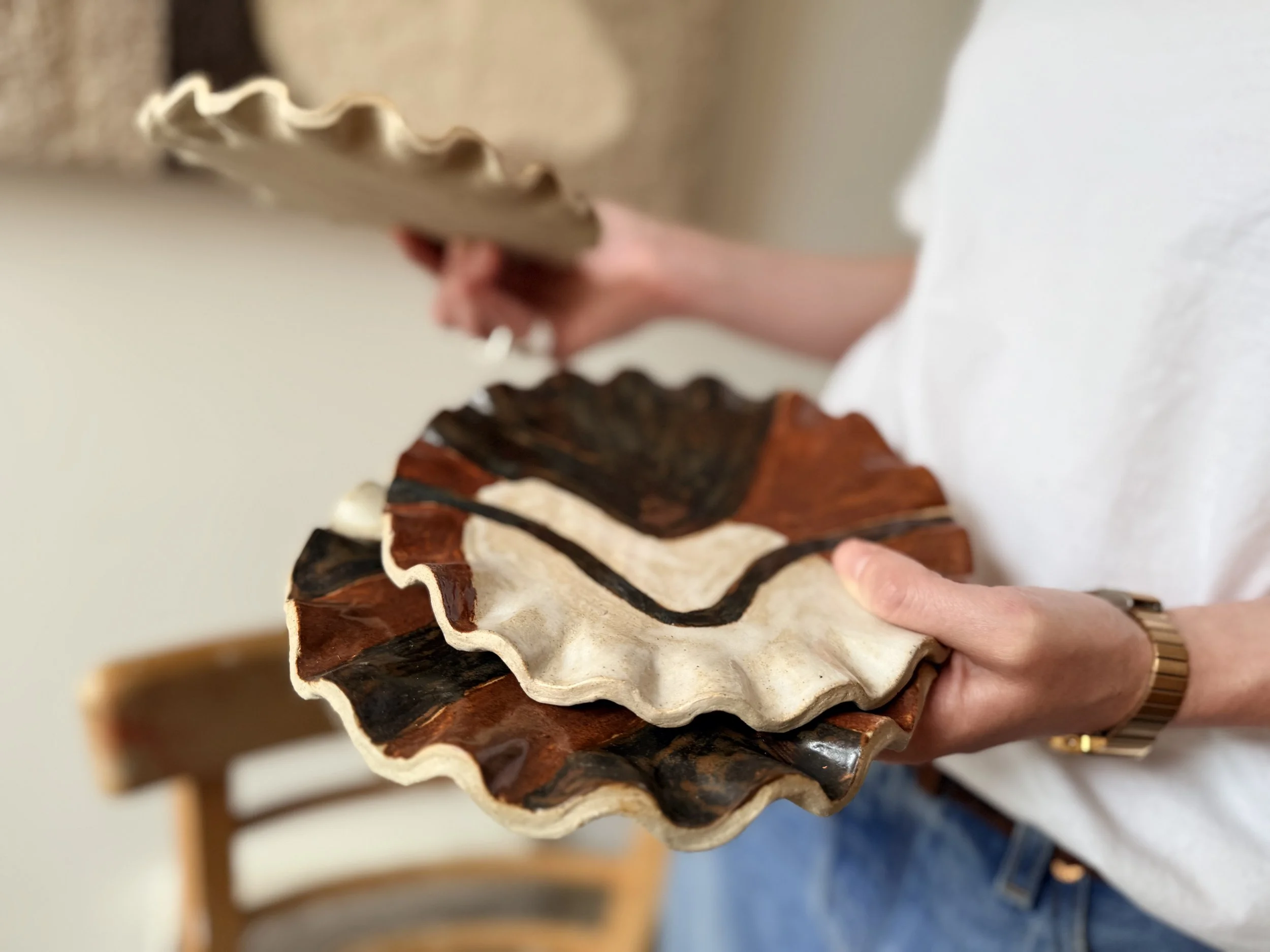
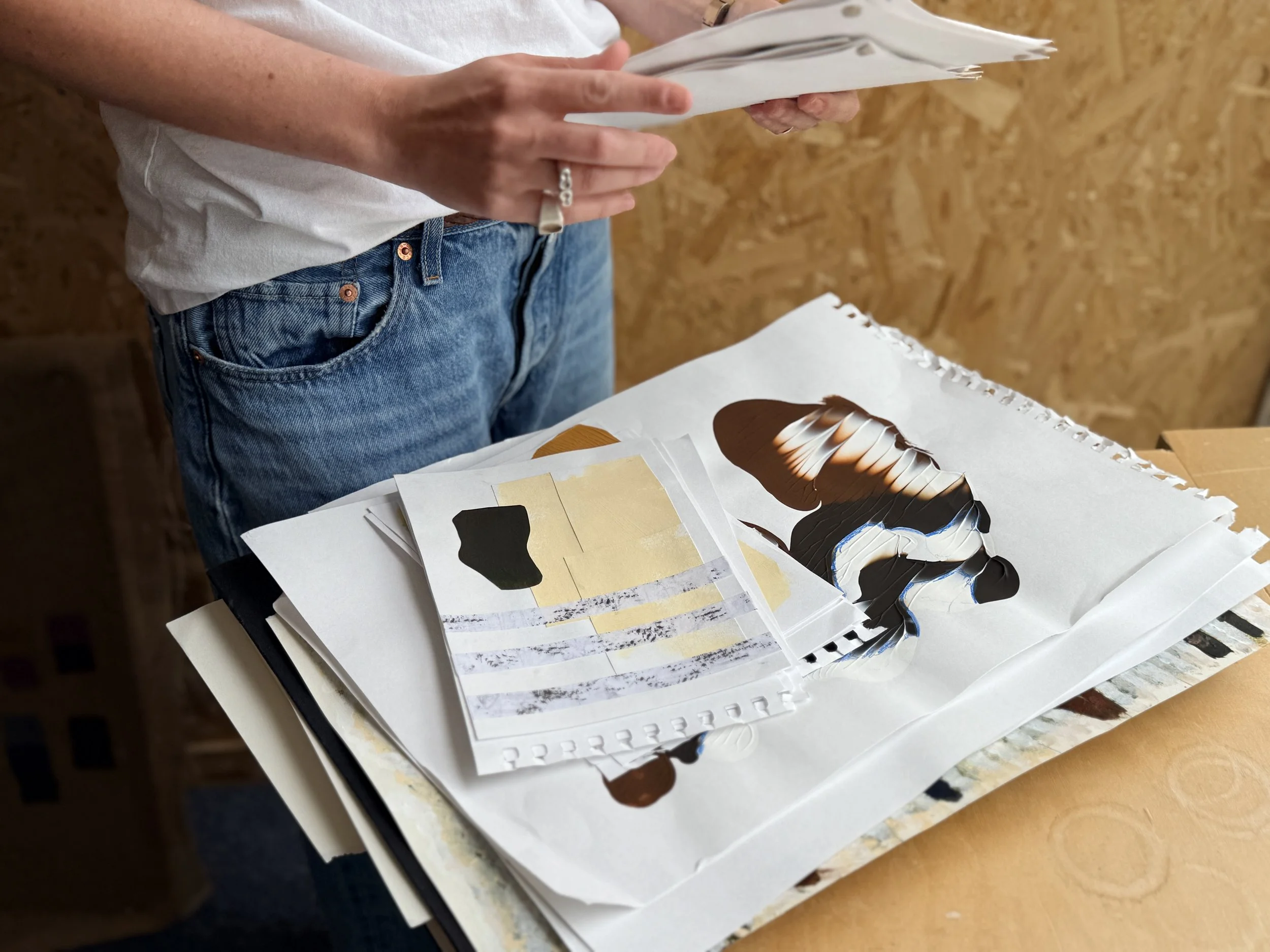
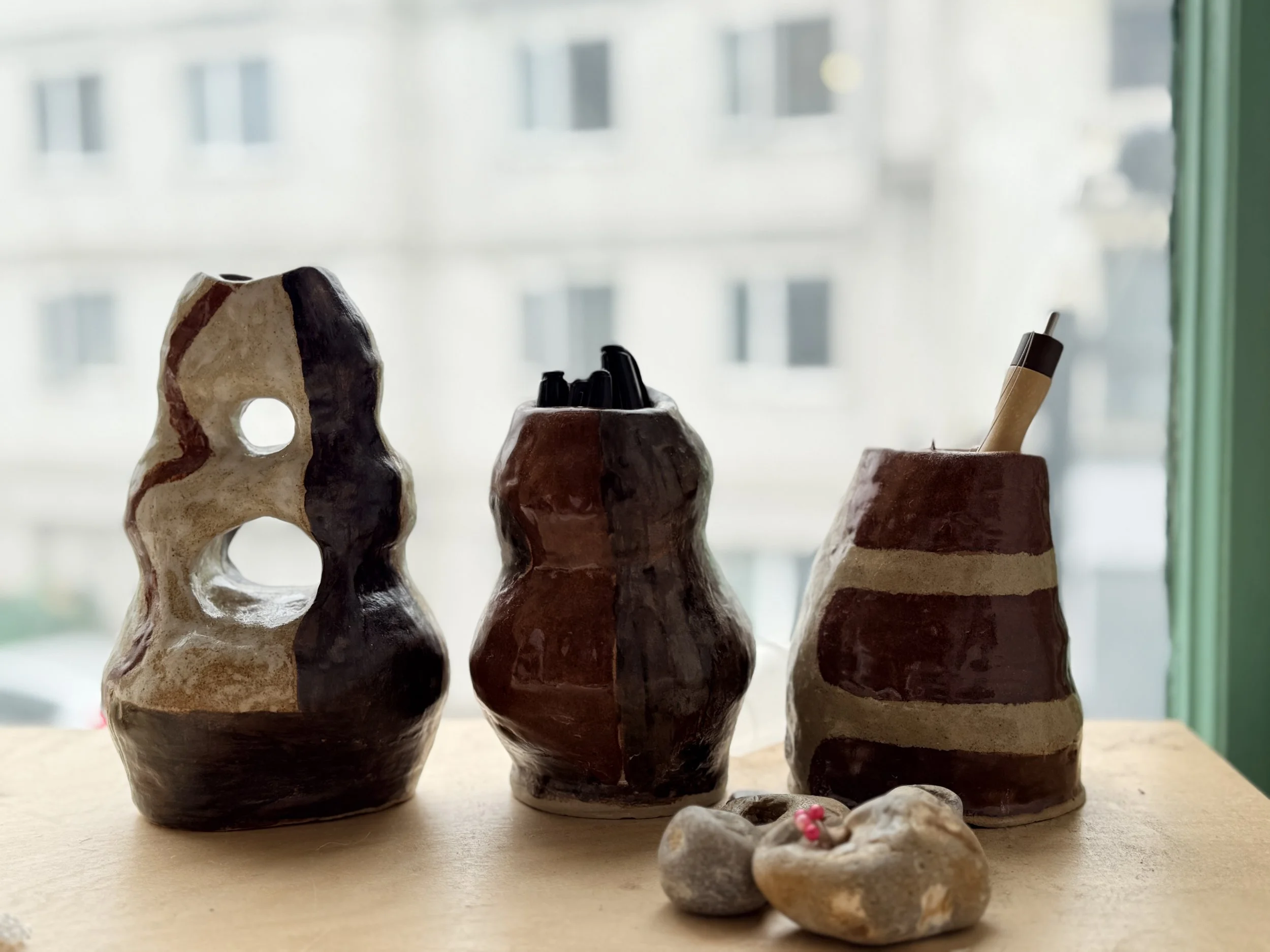
I’m giving myself more time to play and explore different techniques, not just textiles, but also clay, paint, and drawing. I try to go to life drawing regularly as well, just to keep things moving and to not overthink outcomes.
I’ve realised how important it is to simply make things, without always knowing where they are going.
Last year, I was working on commission after commission, very much in a designer mindset, working from briefs, refining ideas with clients, adjusting colours and outcomes. I still enjoy that way of working, but I’ve also needed to step back from it and allow space for something more open-ended.
That shift is still ongoing. It feels like something that will keep changing.
Q: How has Folkestone influenced your work?
A: We moved to Folkestone around five years ago, from London, during the time when many people were leaving the city around COVID.
We were drawn here because of the creative community. There’s the Creative Quarter, the studios, and the Triennial, which takes place every three years. There’s art everywhere in the town, even just looking out of the window, you can see public works.
There’s also something very calming about being by the sea. I studied in Brighton, so I’ve always been drawn to coastal places. There’s a sense of space here that you don’t always get in a city, more sky, more openness.
It felt like a very welcoming place when we arrived, especially because so many people had moved here at the same time. It was easy to meet others and feel part of a community.
We are now preparing to move to Manchester, to be closer to family and to start a new chapter. I’m excited to see what that change will bring, and to explore a different creative environment.
Q: Could you talk us through the works you’ve selected for Muse Studio?
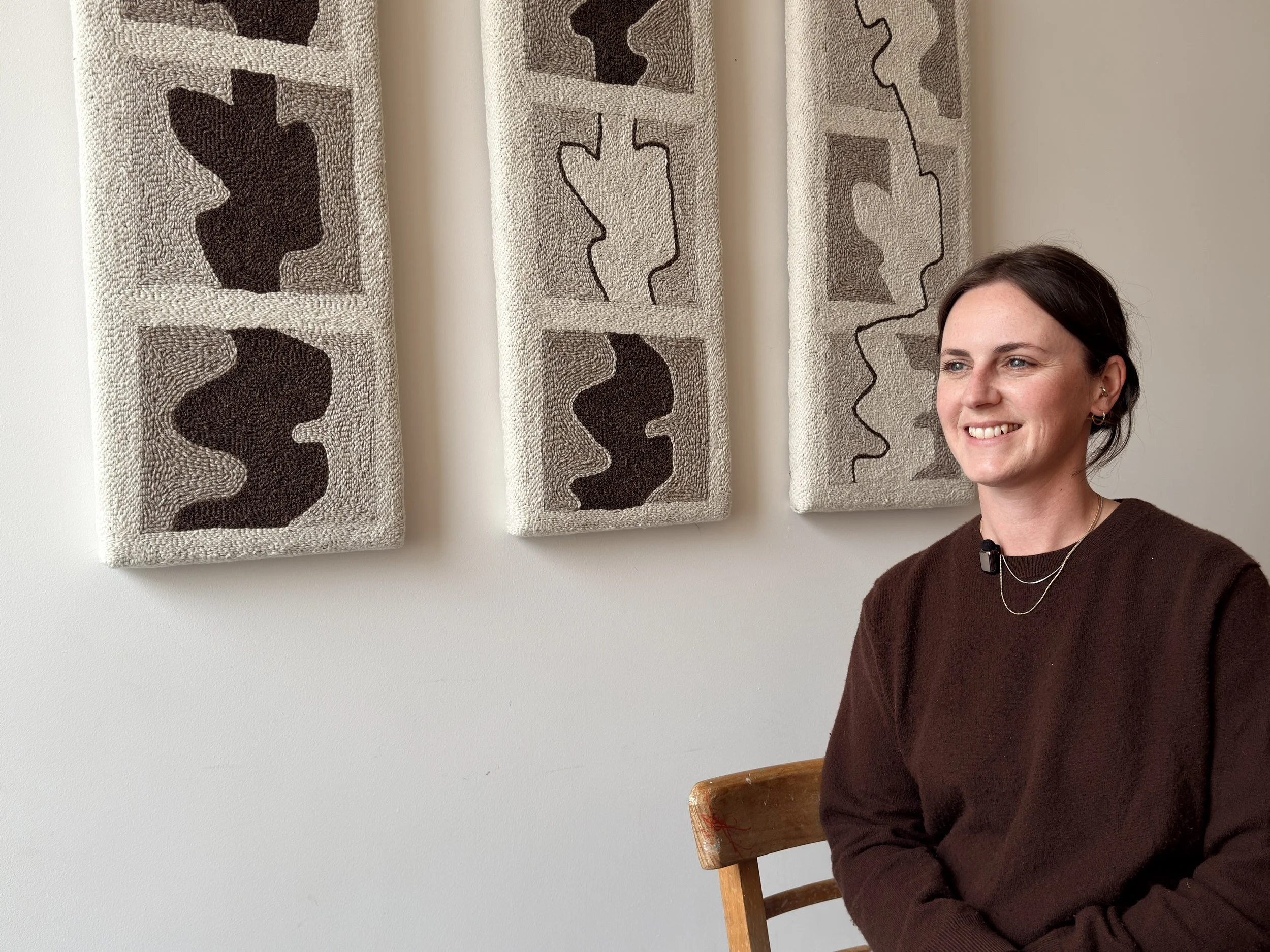
A: The three pieces I’ve selected for Muse Studio are a really nice scale, they’re not too large, so they don’t dominate a space, but they still create a sense of warmth and visual interest.
I think that’s something I really like about textiles. There’s an inherent softness to the material, a connection to fabric, clothing, and the idea of being wrapped or held. It naturally brings a sense of comfort.
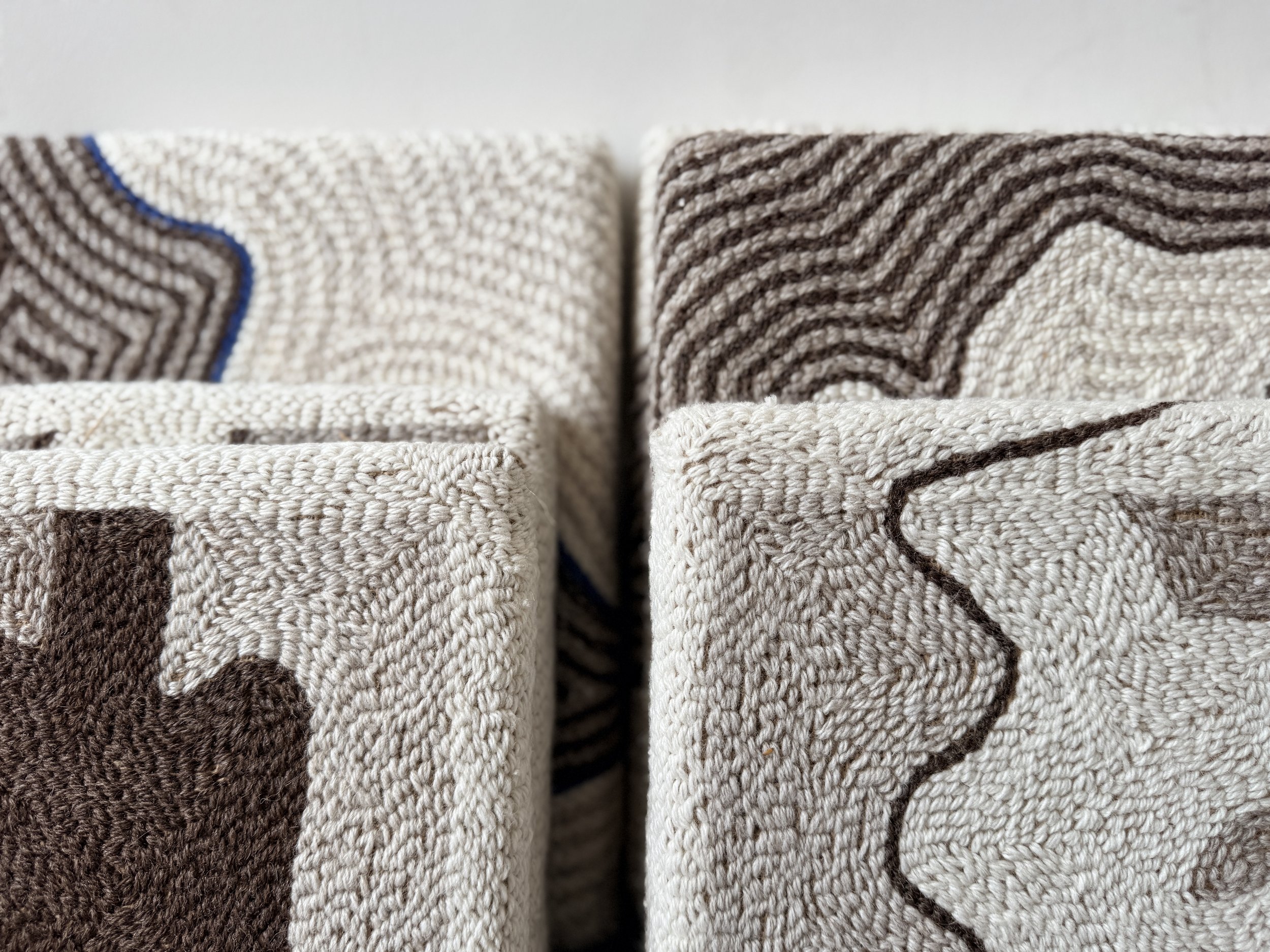
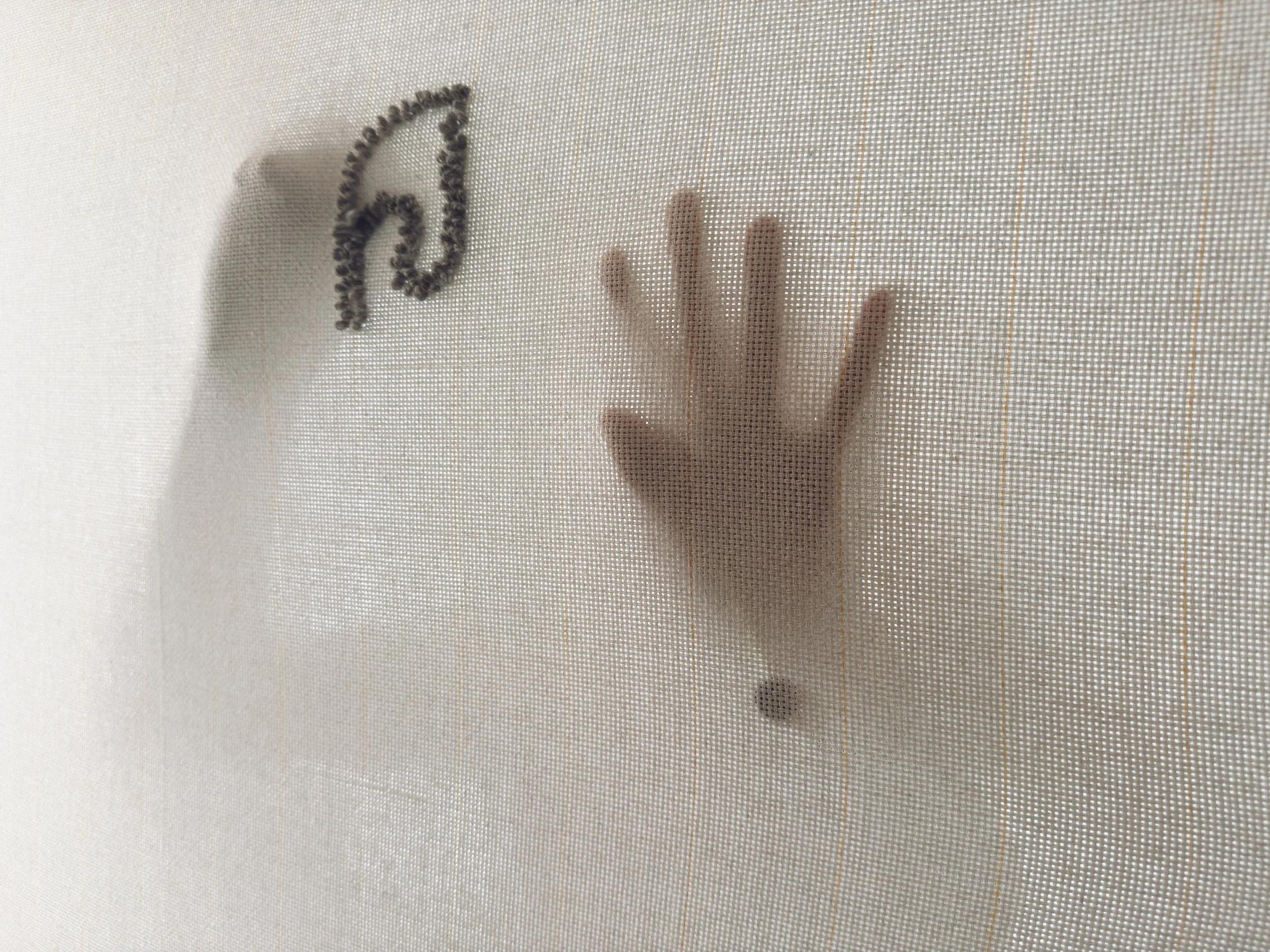
From a distance, the works appear quite abstract and block-like. But as you move closer, you start to see the detail, the marks of the punch needle, the structure, and the way the surface has been built through layers of yarn.
That shift between distance and intimacy is really important to me, the idea that the work reveals itself gradually.
Q: Where would you like to take your practice next?
A: I first In the future, I’d like to work on a larger scale. I really enjoy making bigger pieces — they feel more impactful, and allow for more texture and presence.
Even though the process can be very time-consuming, I find that very engaging.
I’m also interested in moving further into three-dimensional work, possibly sculpture. I’ve been thinking about creating freestanding pieces, perhaps using a screen-like structure as a base.
I like the idea of works that can be viewed from all sides — where you can walk around them, see both front and back, and experience them spatially.
These are ideas I want to explore more in the future. It’s really about making time to play and experiment, and seeing where those ideas can lead.
CLEMENTINE’S WORDS
‘I first came across Alice Liptrot’s work in a small shop in Folkestone, a place I’ve loved visiting over the years whenever I’m there to see my uncle. Her pieces stayed with me long after I left. I remember saving her details, quietly thinking that one day I would treat myself to one of her creations.
When Muse Studio came to life, reaching out to Alice felt like the most natural thing to do. Her world resonates so deeply with everything Muse stands for—the soft colour palette, the thoughtful craftsmanship, the timeless aesthetic and the care behind every piece.
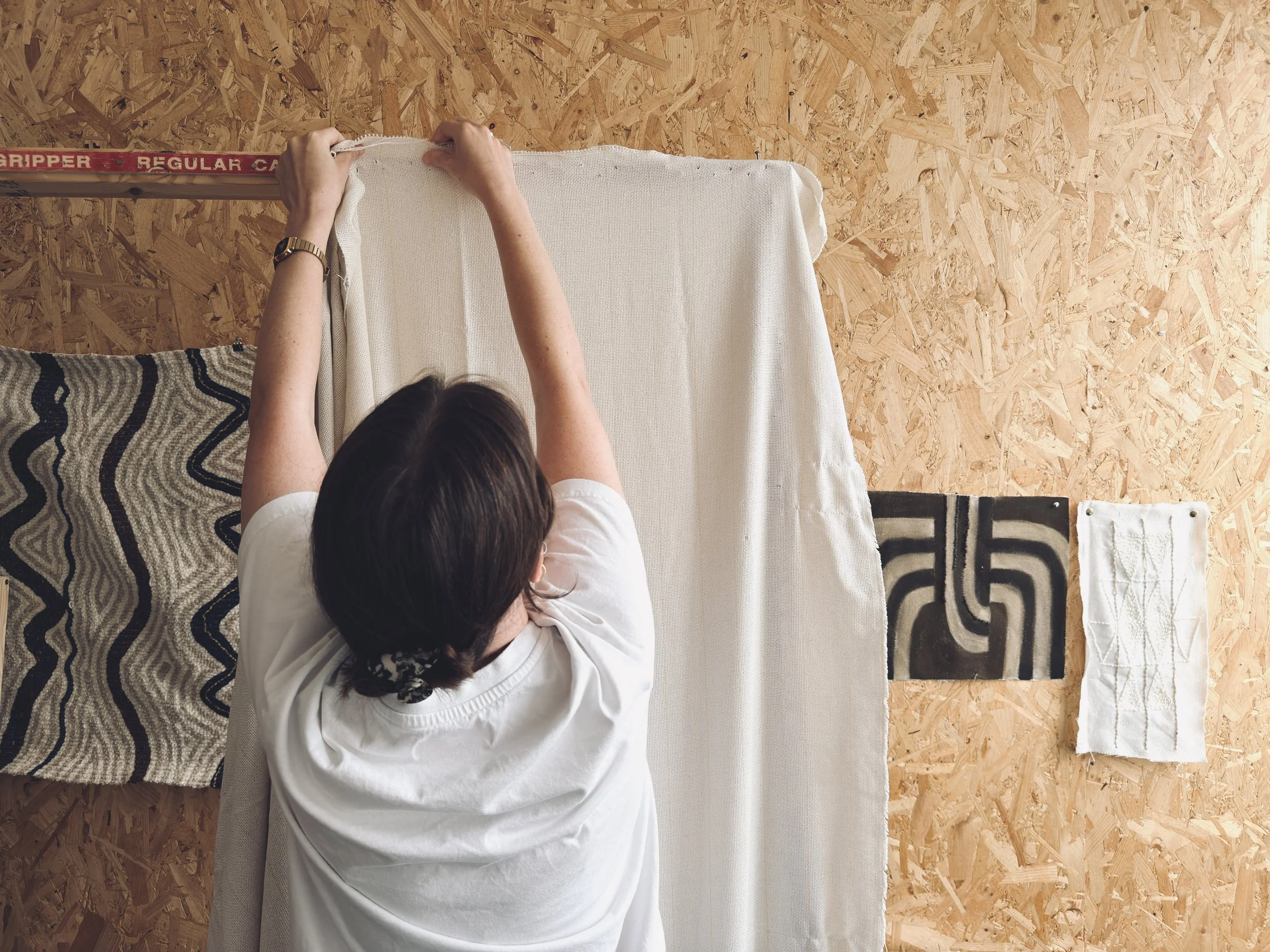
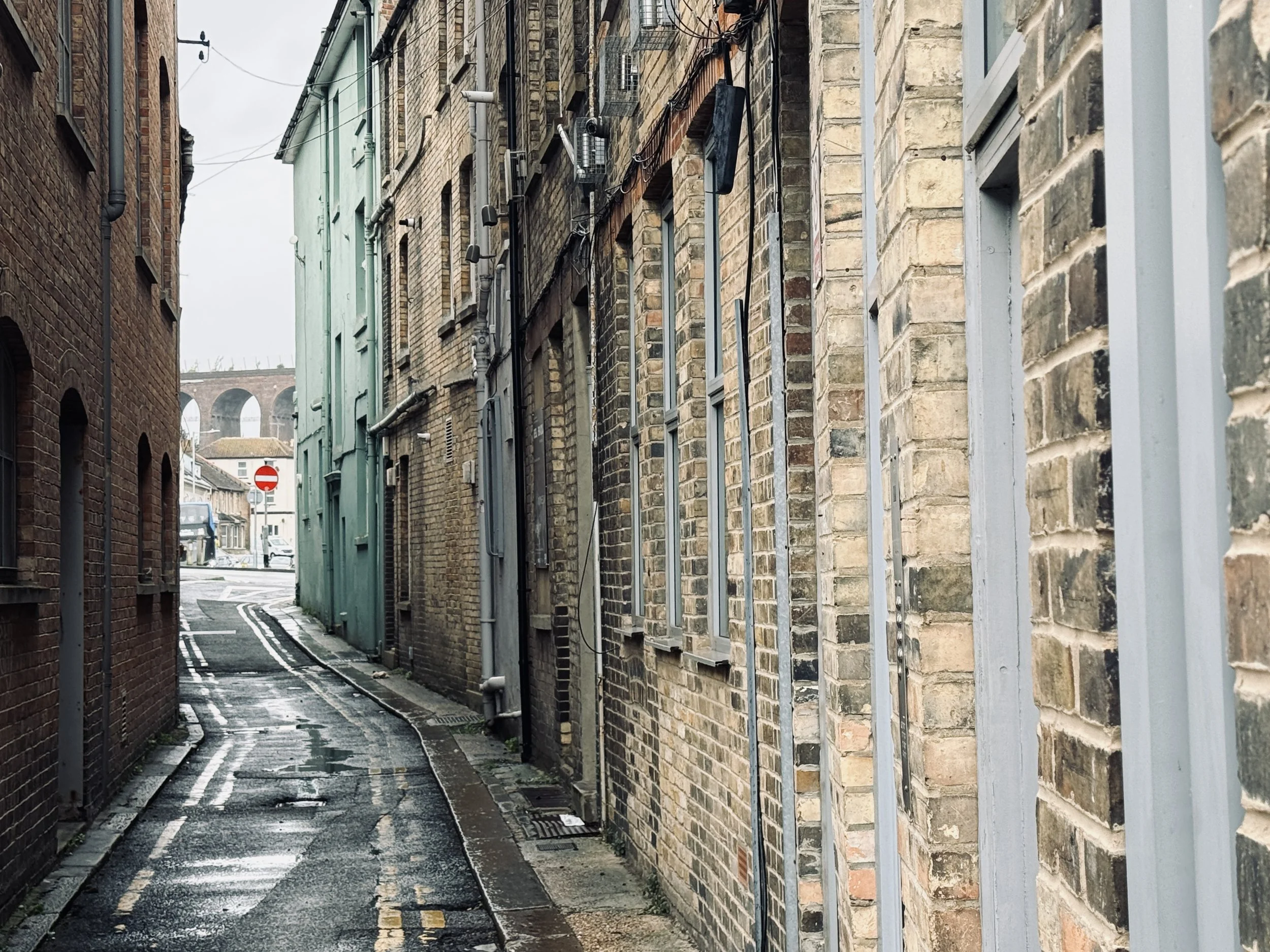
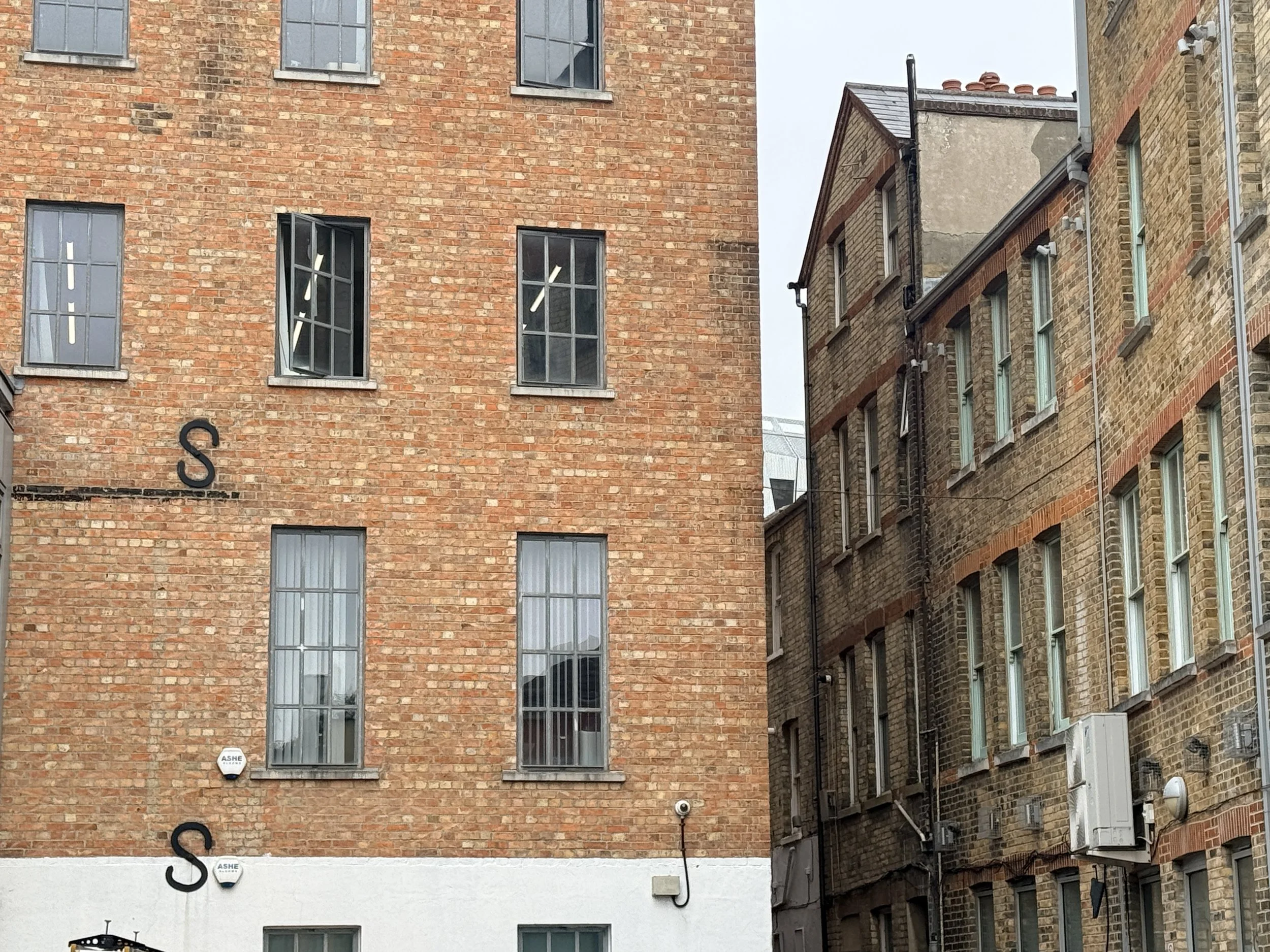
I arrived at her studio on a rainy day, tucked away inside an old industrial building shared by a community of artists. Even before stepping through her door, the place felt inspiring. Alice welcomed me with such warmth and quiet kindness, and we spent the morning talking as she guided me through her creative process, sharing the story behind her work and the different stages that bring each piece to life.
There is something incredibly special about witnessing an artist’s hands at work and understanding the intention behind every detail. It was a beautiful, enriching encounter, and I left feeling inspired, grateful, and even more connected to the world she has created.’
Film, Photography & Interview by Clémentine Rovere
Alice’s works are available to discover throug The Shop
Textile wall art by Alice Liptrot
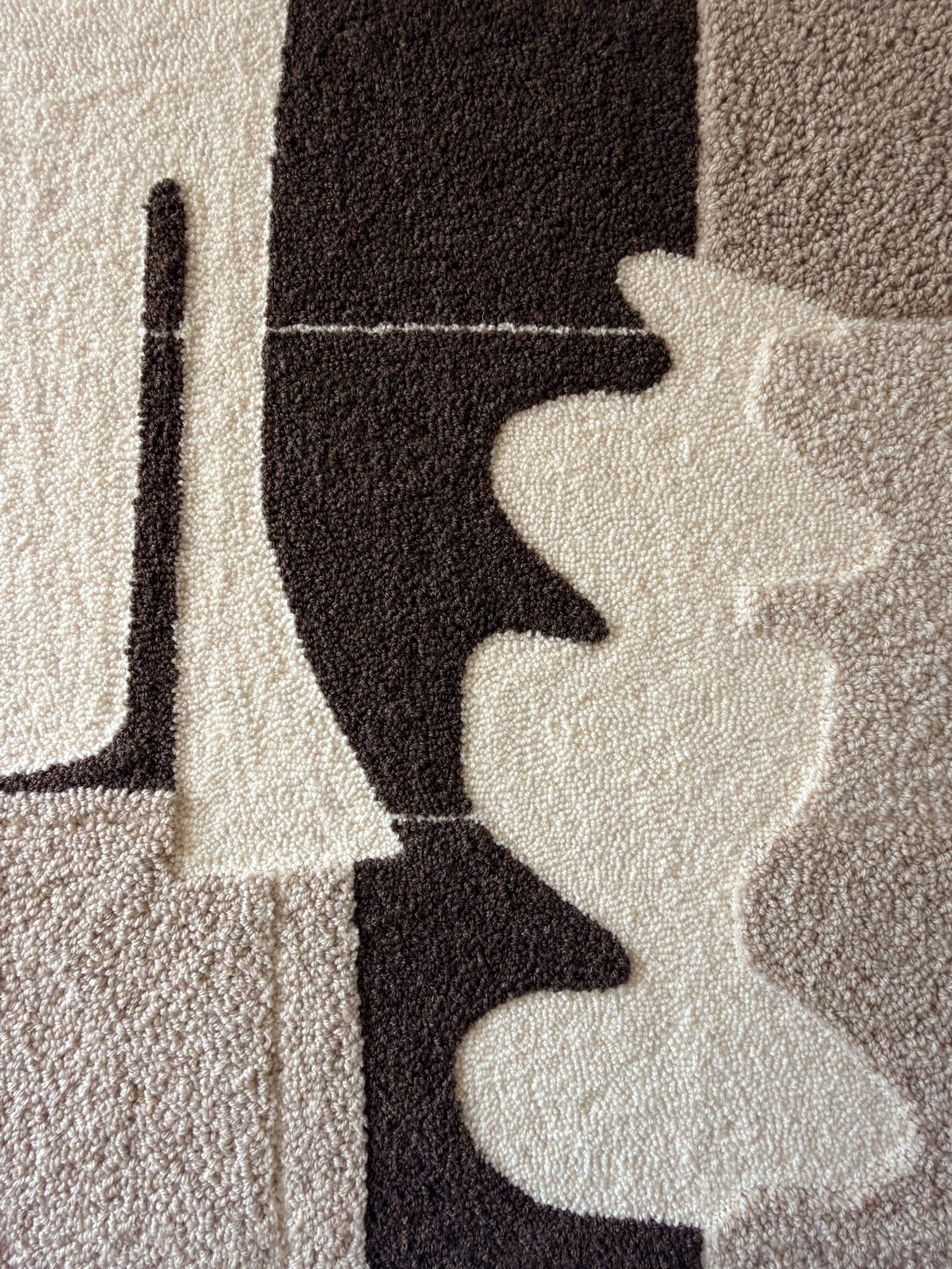
A small work made slowly. Hand-punched using undyed Romney yarn on hessian, this piece comes directly from Alice's studio practice in Folkestone, part of an ongoing series of studies that explore texture, repetition and the quiet rhythm of making by hand.
Each work in this collection was chosen by the Artist for MUSE, selected for the story behind it, not just the surface.
Now available through MUSE.
Material: Undyed Romney yarn on hessian
Dimensions: 27 x 27cm
Edition: One of a kind, 2026